
巴新政府网 (2026-04-29):巴新总理马拉佩会见林占熺教授 寻求大幅扩展与中国菌草技术合作(译文)
译 文:
巴新总理马拉佩会见林占熺教授 寻求大幅扩展与中国菌草技术合作
近日,巴布亚新几内亚总理詹姆斯·马拉佩在广州参与高层会谈,期间会见了菌草技术发明人林占熺教授,高度评价菌草项目长期取得的成功,并表示希望大幅扩大巴新与中国在菌草技术领域的合作。
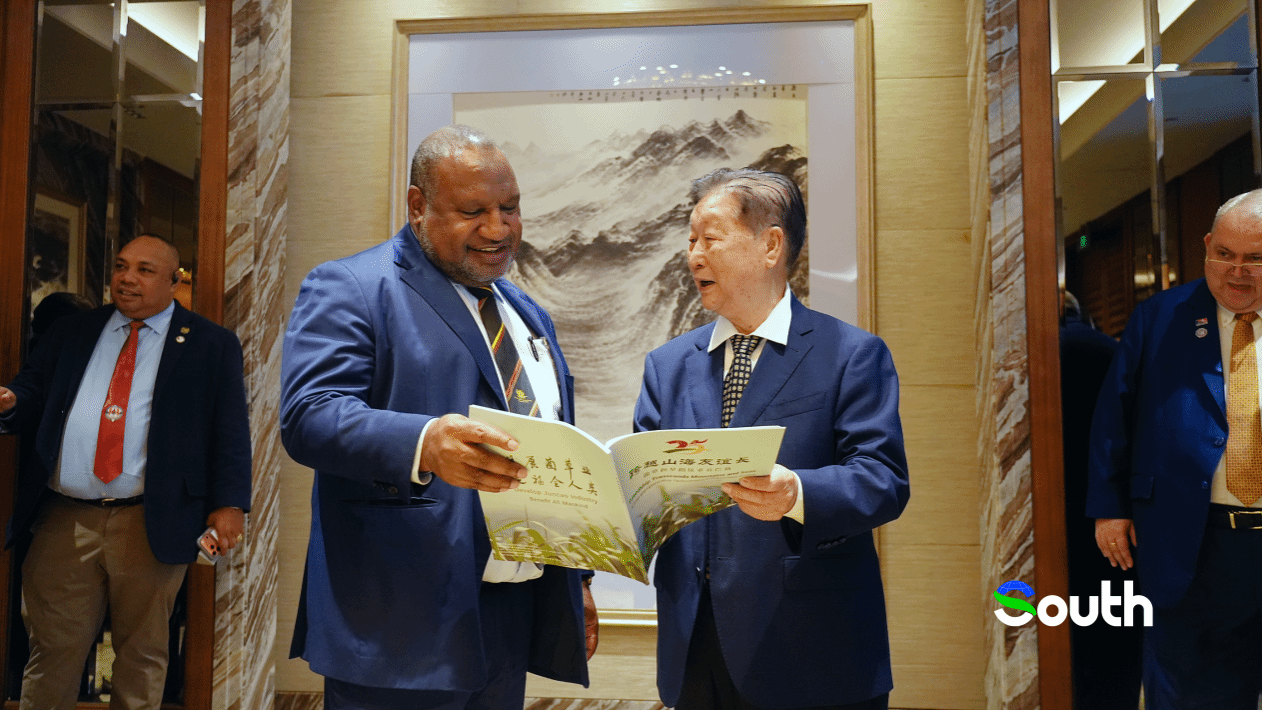
马拉佩总理表示,菌草技术自1997年引入巴布亚新几内亚东高地省以来,已经充分证明其价值。近30年来,该技术持续惠及当地社区,改善民众生活,并推动巴新农业发展。
马拉佩指出,当年时任福建省省长习近平决定支持菌草项目落地巴新,展现出非凡远见。
“习近平主席早已预见到许多人当时尚未意识到的问题,”马拉佩说,“预见到粮食安全将成为全球重大议题,也预见到绿色清洁产品和可持续技术将对未来至关重要。”
马拉佩表示,全球人口增长、可耕地减少、气候变化、土地荒漠化以及天气模式变化,正不断加剧全球粮食系统压力。
他警告称,到2050年,世界人口预计将超过100亿,粮食、水和能源将成为人类最关键的三大需求。
“能够生产优质、健康食品的技术,已成为当今世界最重要的需求之一。”他说。
马拉佩表示,凭借现代农业合作,巴布亚新几内亚具备成为区域“粮仓”的独特条件。
他说,巴新拥有丰饶的土地、全年降雨和阳光充足、自然资源丰富,水电可再生能源潜力巨大。
“巴布亚新几内亚拥有充足的可耕地,一年365天都有雨水和阳光,”他说,“我们可以结合中国技术,特别是已经落地巴新的菌草技术,扩大粮食生产,在满足本国需求的同时,将剩余农产品出口至印度尼西亚、菲律宾、中国等亚洲市场。”
马拉佩指出,亚太地区许多国家因人口增长和土地资源有限,正面临日益严峻的粮食安全风险,巴新有能力帮助满足区域需求。
他说,加强与中国的农业合作,不仅有助于深化双边关系,也将帮助整个太平洋地区应对未来可能出现的粮食短缺问题。
“太平洋国家因气候变化及其他压力面临粮食安全挑战时,巴布亚新几内亚可以成为本地区稳定的粮食供应来源。”他说。
林占熺教授在发言中表示,巴新菌草项目已成为国际公认的成功典范。
他说,该项目在减贫和可持续发展方面成效突出,获得包括多个国际机构在内的广泛国际认可,并已成为南太平洋地区发展合作的重要示范项目。
林占熺表示,下一阶段目标是将巴新菌草经验打造成为发展中国家的国际标杆。
展望未来,他透露,中国国家菌草工程技术研究中心正与深圳能源集团开展重要合作,推动菌草技术从农业领域拓展至巴新的工业和能源领域。
他说,新合作项目包括利用菌草开展土壤修复、水土流失治理、高端生物质燃料开发,以及未来工业原材料应用等。
林占熺表示,该合作将帮助巴布亚新几内亚应对气候变化、改善退化土地、发展碳汇经济,并为绿色低碳工业发展奠定基础。
在象征性赠送仪式环节,林占熺向马拉佩总理展示了一件由菌草纤维与棉等材料混纺制成的T恤,并表示这是全球首批同类产品。
他说,未来菌草产品有望在服装、食品、住房、交通和环境保护等领域发挥越来越重要的作用。
林占熺还向马拉佩赠送纪念画册《友谊跨越山海》,记录中国与巴布亚新几内亚25年的友好交往历史,特别是福建省与东高地省之间的合作历程。
画册收录了马拉佩总理在2021年菌草合作20周年纪念活动上的讲话,以及其历次访问和双边会见照片。
马拉佩对菌草技术扩大发展蓝图表示欢迎,并表示巴新愿进一步深化与中国在农业、可再生能源、气候韧性和可持续工业增长等领域的合作。
“我们该如何进一步巩固和深化菌草技术、扩大推广应用、推动其发展壮大?”马拉佩表示,“菌草不仅能够帮助巴布亚新几内亚,也有潜力帮助周边国家解决粮食问题。”
他感谢林占熺毕生致力于为人类创造实用技术,并表示巴布亚新几内亚期待与中国以粮食安全、创新与共同繁荣为基础,进一步深化同中国的伙伴关系。
原 文:
Prime Minister Marape Seeks Major Expansion Of Juncao Partnership With China Following Meeting With Professor Lin Zhanxi
Prime Minister Hon. James Marape has praised the long-standing success of Professor Lin Zhanxi and called for a major expansion of the Juncao technology partnership between Papua New Guinea and China following a high-level meeting with the pioneering scientist in Guangzhou.
Meeting with Professor Lin, Prime Minister Marape said the innovation had already proven its value in Papua New Guinea since being introduced in 1997 in Eastern Highlands Province.
He noted that almost 30 years later, the technology was still benefiting communities, improving livelihoods, and contributing to agriculture development in Papua New Guinea.
Prime Minister Marape said the decision by Professor Lin and Xi Jinping—then Governor of Fujian Province—to support the project in Papua New Guinea demonstrated extraordinary foresight.
“You and President Xi Jinping looked ahead into time and saw something many did not see,” Prime Minister Marape said.
“You saw that food security would become a major global issue, and that clean, green products and sustainable technology would be essential for the future.”
The Prime Minister said global population growth, shrinking arable land, climate change, desertification, and changing weather patterns were increasing pressure on food systems worldwide.
He warned that by 2050 the world population was expected to exceed 10 billion people, making food, water and energy the three most critical needs of humanity.
“Technology that produces good and healthy food is one of the premier needs of our world at present,” he said.
Prime Minister Marape said Papua New Guinea was uniquely positioned to become a regional food basket through modern agricultural partnerships.
He said the country had abundant fertile land, year-round rain and sunshine, rich natural resources, and vast renewable energy potential through hydropower.
“Papua New Guinea has enough arable land. We have 365 days a year of rain and sunshine,” he said.
“We can partner Chinese technology, especially Juncao technology already in our country, and expand food production to support our people while exporting surplus produce to Asian markets such as Indonesia, the Philippines and China.”
Prime Minister Marape said many countries in the Asia-Pacific region faced rising food security risks because of growing populations and limited land, and Papua New Guinea could help meet that demand.
He said stronger agriculture cooperation with China would not only strengthen bilateral relations but also help secure the wider Pacific region against future food shortages.
“When Pacific nations face insecurity in food because of climate change and other pressures, Papua New Guinea can be a constant supply source for our region,” he said.
Professor Lin, in his remarks, said the Papua New Guinea Juncao project had already become an internationally recognised success story.
He said the programme had received global recognition for poverty reduction and sustainable development, including awards from major international institutions, and had become a model for development across the South Pacific region.
Professor Lin said the next goal was to transform the PNG experience into a global benchmark for developing countries.
Looking to the future, he revealed a significant new breakthrough involving cooperation between the China National Juncao Research Center and Shenzhen Energy Group to expand Juncao technology from agriculture into industrial and energy applications in Papua New Guinea.
He said the new initiative included Juncao cultivation for soil remediation, erosion control, premium biomass fuel, and future industrial raw materials.
Professor Lin said the cooperation would help Papua New Guinea tackle climate change, improve degraded land, and develop a carbon sink economy while laying the foundation for a green, low-carbon industrial future.
In a symbolic presentation, Professor Lin showed Prime Minister Marape a specially-made T-shirt produced using Juncao grass fibre blended with cotton and other materials, describing it as the first batch of its kind in the world.
He said future Juncao-based products could play an increasing role in clothing, food, housing, transport and environmental protection.
Professor Lin also presented a commemorative photo book titled Friendship Cross Mountains and the Seas, documenting 25 years of friendship between China and Papua New Guinea, particularly between Fujian Province and Eastern Highlands Province.
The publication includes Prime Minister Marape’s speech during the 20th anniversary of Juncao cooperation in 2021, along with photographs of his visits and bilateral meetings.
Prime Minister Marape welcomed the expanded vision for Juncao technology and said Papua New Guinea stood ready to deepen cooperation with China in agriculture, renewable energy, climate resilience, and sustainable industrial growth.
“How do we entrench Juncao technology, expand it, and make it bigger?” Prime Minister Marape asked.
“It can help save Papua New Guinea, and not just Papua New Guinea—it has the potential to help feed countries around us.”
He thanked Professor Lin for dedicating his life to creating practical technologies for humanity and said Papua New Guinea looked forward to a stronger future partnership with China built on food security, innovation, and shared prosperity.
图片来源:South南方国际传播中心
【关闭】